
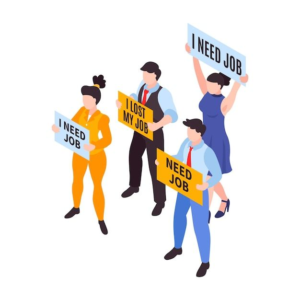
Unemployment is no longer just about the lack of jobs; it reflects deeper failures in education, economic planning, and skill development. Millions of capable people struggle to find stable and dignified work, leading to financial stress, loss of confidence, and social instability. Addressing unemployment requires creating meaningful opportunities, not just increasing numbers.
🔹 Major Issues
1. Rising educated unemployment
Despite higher education levels, many graduates remain unemployed or underemployed. Degrees alone no longer guarantee jobs, especially when education is disconnected from real market needs.
2. Growth of contractual and gig jobs
Short-term contracts and gig work provide income but no stability. Workers lack job security, health benefits, pensions, or long-term growth opportunities.
3. Limited rural employment opportunities
Villages and small towns offer very few employment options beyond agriculture. This forces large-scale migration to cities, increasing urban pressure and rural decline.
4. Government recruitment delays
Government exams and recruitment processes often take years to complete. Age limits and repeated delays push eligible candidates out of the system entirely.
5. Low women workforce participation
Social barriers, safety concerns, lack of childcare, and workplace bias prevent many women from entering or continuing employment.
🔹 Key Reasons
1. Degree-focused education system
Education prioritizes certificates over skills. Students graduate without practical exposure, making them unprepared for real-world jobs.
2. Industry–academia mismatch
Industries require specific skills, but colleges fail to update curricula. This gap leaves employers dissatisfied and job seekers unqualified.
3. Weak MSME growth
Small and medium businesses are major job creators, yet they struggle due to lack of credit, high compliance costs, and poor policy support.
4. Over-dependence on government jobs
Millions chase limited government vacancies, ignoring private-sector opportunities due to job insecurity and low wages.
5. Lack of career guidance
Students often choose courses without understanding market demand, leading to poor career decisions and frustration.
🔹 Long-Term Consequences
1. Rising poverty and debt
Unemployment reduces household income, forcing families into loans and long-term financial insecurity.
2. Mental health crisis
Joblessness leads to stress, depression, loss of self-worth, and in extreme cases, suicide.
3. Increase in crime and unrest
Economic desperation pushes some towards illegal activities, increasing social instability.
4. Brain drain
Talented youth leave the country in search of better opportunities, weakening national development.
5. Loss of trust in governance
Continuous unemployment erodes faith in institutions and political leadership.
🔹 Possible Solutions
1. Skill-based education reform
Education must focus on employable skills, apprenticeships, and hands-on training.
2. Support for MSMEs and startups
Easy credit, reduced compliance, and policy stability can boost job creation.
3. Local employment generation
District-level industries and rural enterprises can reduce migration.
4. Transparent recruitment systems
Time-bound and fair recruitment processes restore trust.
5. Women-friendly policies
Safe workplaces, flexible hours, and childcare support can increase women’s participation.